



Switching careers is not a crisis. It is a strategy. The professionals who treat it that way make the move on their terms. Everyone else waits until circumstances force them.
Whether you are moving from one industry to another, shifting from individual contributor to leadership, or rebuilding after a layoff, the fundamentals of a successful transition are the same. And they are more learnable than most career advice would have you believe.
Start With an Honest Skills Audit
The first mistake professionals make in transition is leading with their resume. Your resume reflects where you have been. A transition requires you to lead with where you are going and build the evidence that you can get there.
Start by mapping the skills your target role requires against what you currently have. Be specific. "Leadership experience" is not a skill. "Managing cross-functional teams of eight or more through a product launch cycle" is. The gap between your current skill set and your target role tells you exactly where to invest next.
Hard skills and soft skills both matter in a transition. Problem-solving, critical thinking, and the ability to deal with complexity and ambiguity are transferable across sectors and often undervalued by professionals who focus only on technical credentials.
Transferable Skills Are Not a Consolation Prize
A common mistake is treating transferable skills as a fallback for people who lack direct experience. They are not. In many cases, cross-industry experience is a competitive advantage particularly for roles that require fresh perspective, change management, or cross-functional leadership.
The key is translation. A nurse moving into healthcare technology consulting has deep clinical knowledge that most tech consultants lack. A teacher moving into corporate learning and development brings instructional design fluency that most HR professionals do not. The skill is real. The work is in framing it correctly for the new context.

The Support Infrastructure Most People Skip
Career transitions take longer without structure. Professionals who go it alone spend months in exploratory mode updating resumes reactively, networking without a target, applying broadly and hearing nothing.
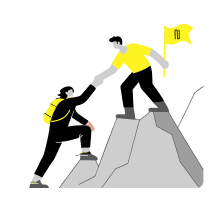
Structure means having a clear target role, a skills development plan, a positioning strategy, and someone outside your immediate circle giving you honest feedback on all three.
Nexford's career coaches are trained specifically for this providing personalized guidance on job searches, networking, and long-term career planning, while tools like the RIASEC personality model and AI career advisor Cary help professionals match their strengths to roles and environments where they will actually perform.
That combination of self-knowledge and external accountability shortens the transition timeline significantly.
One Practical Starting Point
Before you update your resume or apply to a single role, do this: write two paragraphs. The first describes your current professional identity in plain terms. The second describes the professional you are positioning to become. If you cannot write the second paragraph clearly, your transition does not have a foundation yet.
Get that clarity first. Everything else follows from it.
Subscribe to our newsletter
Don't miss out on our latest updates.

Unlock Your Potential: Explore Our Programs
Request Information BACK TO BLOG PAGE